AI Procurement Shield Samples

What the Sprint Outputs Look Like

See how your answers are structured when buyers and auditors ask.

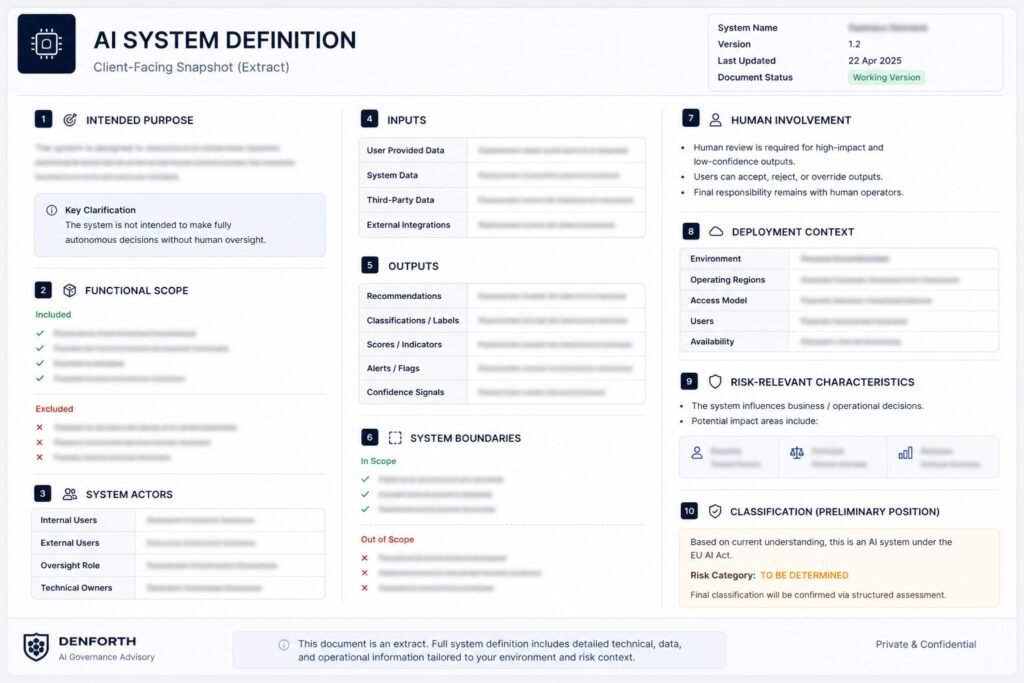
Define what your AI system actually does (for buyers)

State your risk position clearly under scrutiny

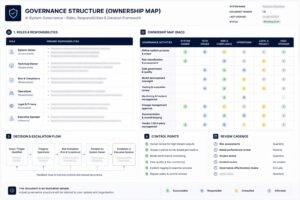
Clarify ownership and response responsibility

Give consistent answers across deals

denforth sysdef sample
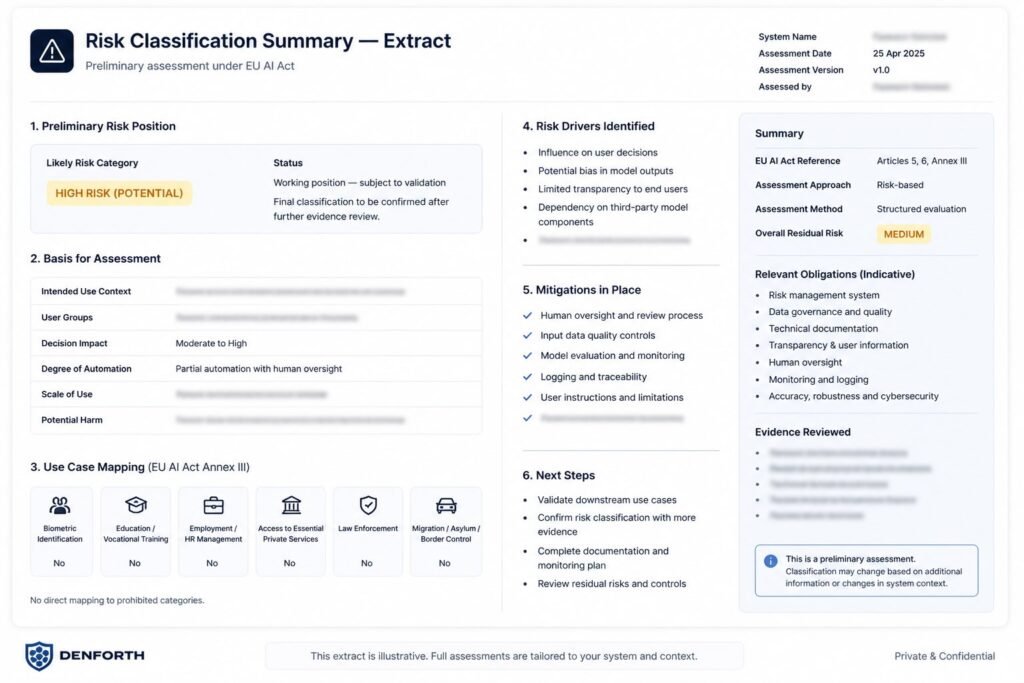
denforth riskclass sample
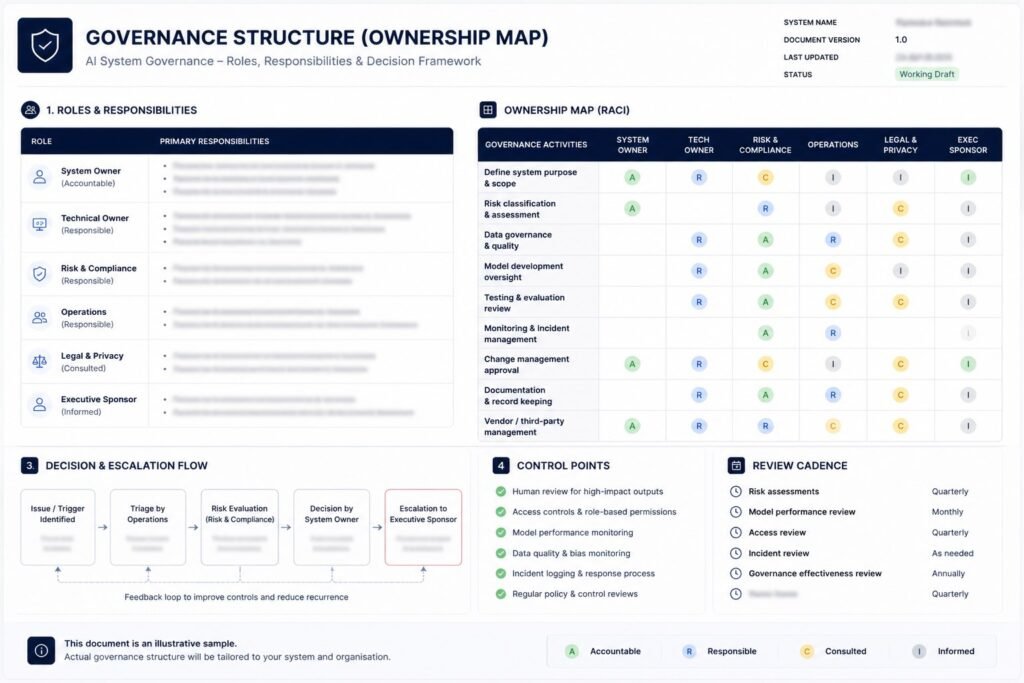
denforth ownership sample

Example Sprint Outputs

Sample outputs from the sprint; simplified and partially blurred.
Full deliverables include deeper technical, data, and governance layers.
Each output is tailored to your system.

→ System Definition → Risk Position → Governance Structure

denforth sysdef sample

AI System Definition

Sample Extract

AI System Definition

Clarifies what the system does, where decisions happen, and how buyers should understand it.

  • System purpose and scope
  • Inputs, outputs, and boundaries
  • Human review and control points
denforth riskclass sample

AI Risk Position Summary

Sample Extract

AI Risk Position Summary

Explains how the system is positioned under buyer and regulatory scrutiny.

  • Risk rationale
  • Key exposure signals
  • Review and mitigation priorities
denforth ownership sample

Ownership & Response Structure

Sample Extract

Ownership & Response Structure

Shows who owns AI-related review, escalation, monitoring, and response.

  • Ownership roles
  • Escalation logic
  • Review cadence

These are only the visible outputs

What you see here are the client-facing artifacts.
The sprint builds the structure behind them:
alignment, ownership, and response logic.
So your team can answer consistently when buyers ask.

Delivered in 4 weeks — first usable outputs in 7 days

From Sample Outputs to a
Reusable Procurement System

This is not a set of documents.
We build a reusable response system your team can
use consistently across deals, reviews, and buyer requests.