Blog

the ai governance lifecycle most teams discover too late

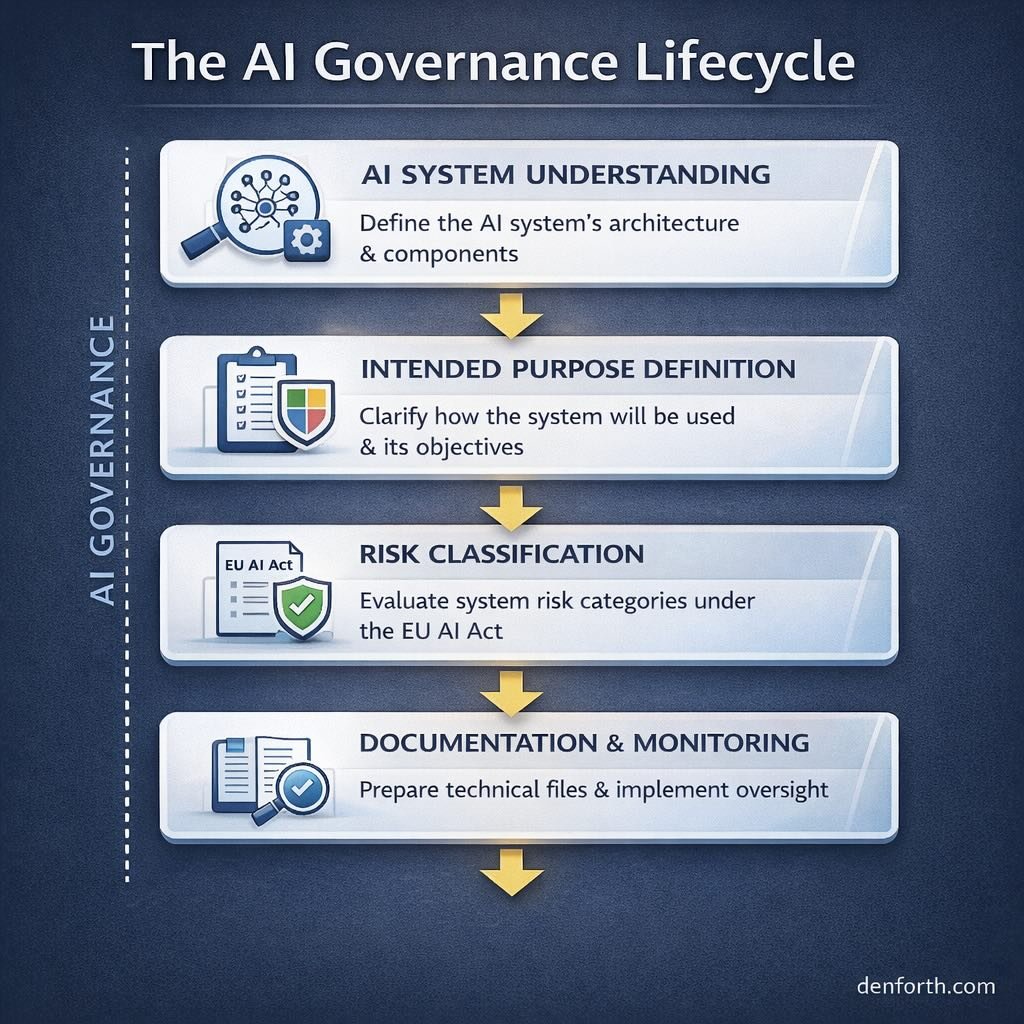
The AI Governance Lifecycle Most Teams Discover Too Late

When companies first encounter the EU AI Act, the conversation often begins with documentation. Teams ask questions like: “What documentation do we need?”“Do we have to prepare technical files?” These questions assume that AI governance begins with writing documents. In reality, documentation usually comes much later in the process. AI governance follows a lifecycle that […]

The AI Governance Lifecycle Most Teams Discover Too Late Read More »
why many ai saas companies cannot explain their eu ai act risk classification

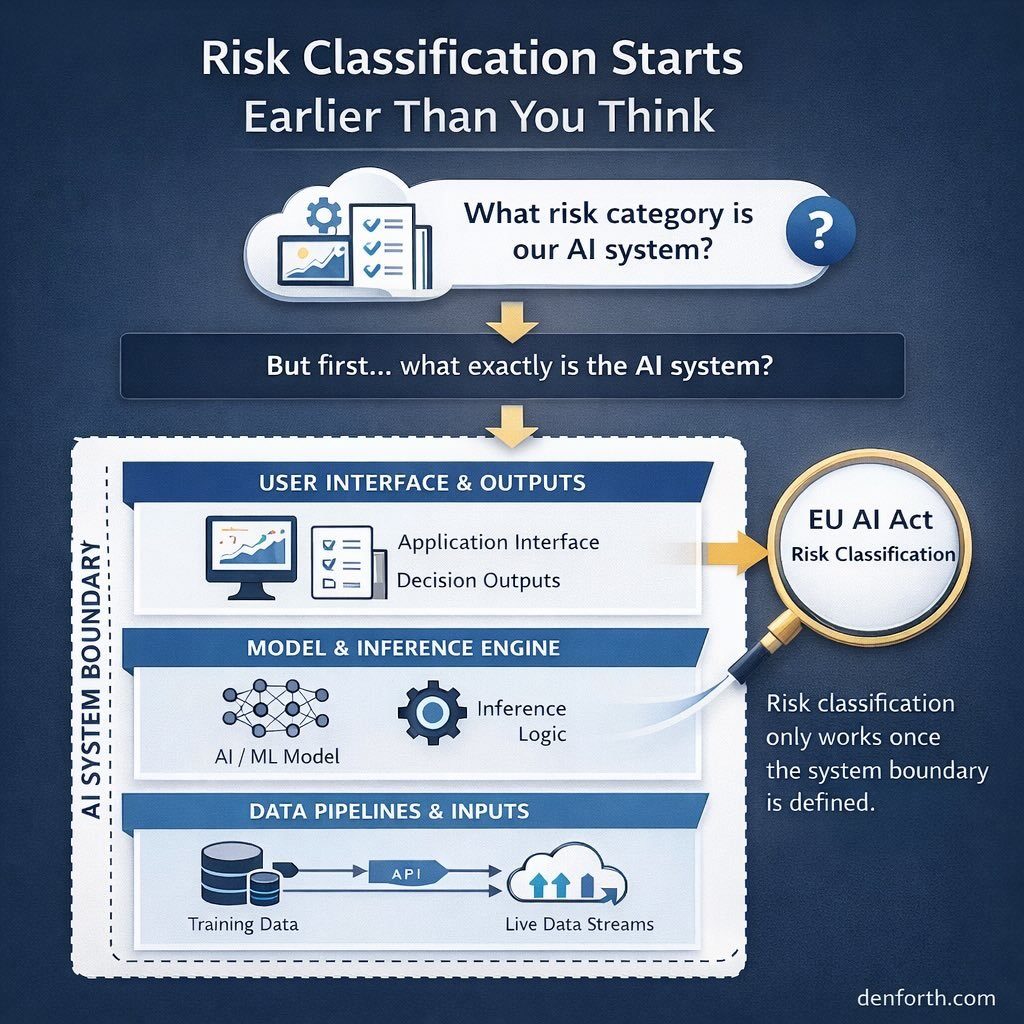
Why Many AI SaaS Companies Cannot Explain Their EU AI Act Risk Classification

A practical governance issue most AI startups discover only when customers begin asking questions. Many AI SaaS companies assume that EU AI Act compliance will mainly involve reading regulatory text and mapping their product to the correct category. In practice, the difficulty appears much earlier. When founders or product leaders are asked about the risk classification

Why Many AI SaaS Companies Cannot Explain Their EU AI Act Risk Classification Read More »

highrisk denforth

High-Risk AI Systems Under the EU AI Act, Explained Simply

Once teams understand what counts as an AI system, the next question usually comes quickly. Are we dealing with a high-risk AI system? This question carries weight because high-risk classification is where the EU AI Act becomes concrete. Requirements increase, expectations rise, and timelines start to matter. At the same time, this part of the

High-Risk AI Systems Under the EU AI Act, Explained Simply Read More »

aisystems denforth

What Counts as an AI System Under the EU AI Act (and What Does Not)

One of the earliest and most consequential questions under the EU AI Act is also one of the most overlooked. Before risk classification, before role mapping, before timelines, a team needs to answer a simpler question: do we actually have an AI system under the Regulation? Many organisations assume the answer is obvious. In practice,

What Counts as an AI System Under the EU AI Act (and What Does Not) Read More »

ai inventory denforth

AI Inventory Under the EU AI Act: Where Compliance Actually Starts

Most discussions about EU AI Act compliance begin with obligations. Risk management, documentation, conformity assessment. For many teams, this immediately feels overwhelming. In practice, compliance does not start with obligations. It starts with visibility. Before a team can classify risk, map roles, or plan timelines, it needs a clear picture of one thing: what AI

AI Inventory Under the EU AI Act: Where Compliance Actually Starts Read More »

prodiver deployer eu ai act denforth

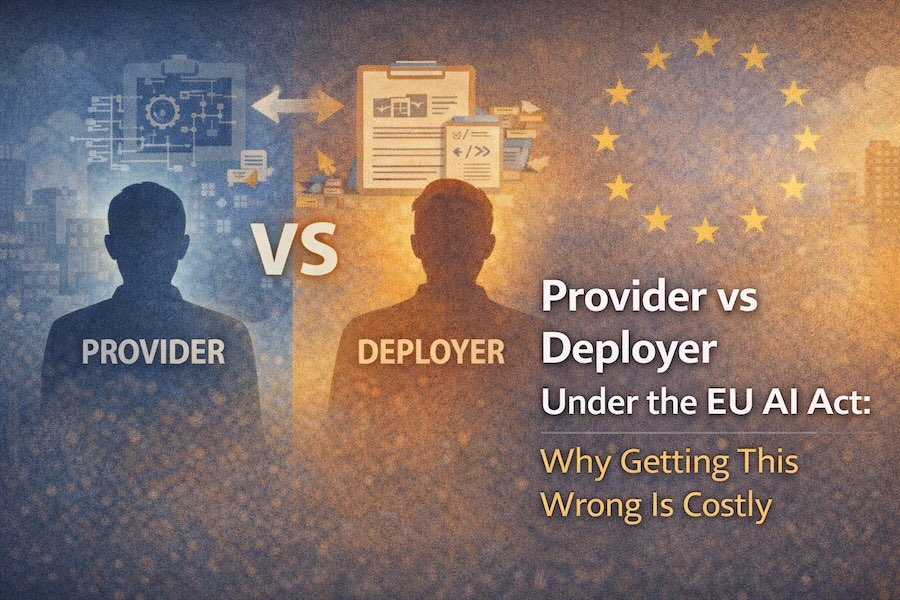
Provider vs Deployer Under the EU AI Act: Why Getting This Wrong Is Costly

One of the most common points of confusion under the EU AI Act is the distinction between provider and deployer. It looks like a legal technicality at first. In practice, it determines who carries the heaviest compliance burden, who owns which risks, and where enforcement pressure will land. Many organisations assume they are deployers simply because they did

Provider vs Deployer Under the EU AI Act: Why Getting This Wrong Is Costly Read More »

annexiv eu ai act denforth

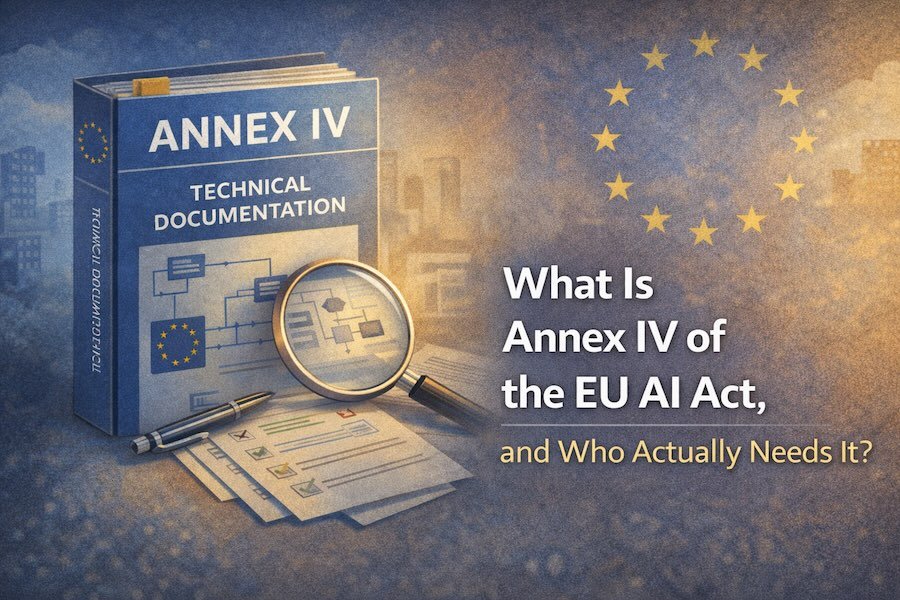
What Is Annex IV of the EU AI Act, and Who Actually Needs It?

Annex IV of the EU AI Act is often mentioned early in compliance discussions, usually in a way that creates unnecessary pressure. Teams hear “Annex IV” and immediately think of heavy documentation, conformity assessment, or regulatory audits. That reaction is understandable, but it skips an important step. Annex IV is not a universal requirement, and

What Is Annex IV of the EU AI Act, and Who Actually Needs It? Read More »

denforth euaiact startupmistakes

Common EU AI Act Mistakes Startups Make (and How to Avoid Them)

Most startups engaging with the EU AI Act make mistakes for one simple reason. They approach it either too casually or too defensively. Some assume the regulation is only relevant for large companies or advanced AI systems. Others assume full compliance work must begin immediately, even when they are still experimenting. Both reactions miss how

Common EU AI Act Mistakes Startups Make (and How to Avoid Them) Read More »