Risk Classification & High Risk AI

denforth evidence problem

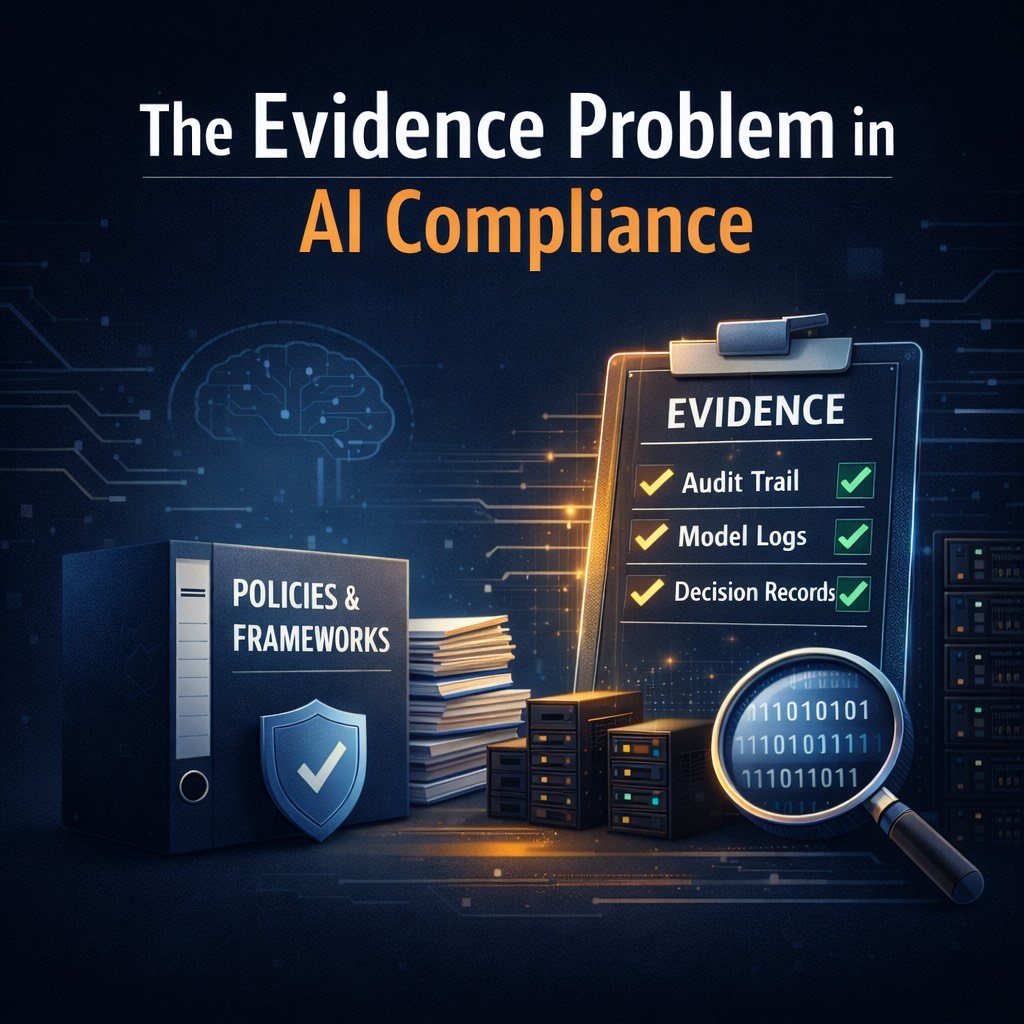
Why AI Compliance Fails Before It Starts: The Evidence Problem

Most AI compliance efforts don’t fail during audits. They fail long before—quietly, structurally, and almost invisibly. The failure begins at the moment a company confuses documentation with evidence. The illusion of preparedness In the early stages of AI governance, most teams move in a predictable way. They assemble policies.They define internal principles.They produce frameworks that look […]

Why AI Compliance Fails Before It Starts: The Evidence Problem Read More »

provider, deployer, distributor why you might be a provider without building ai

Provider, Deployer, Distributor: Why You Might Be a Provider Without Building AI

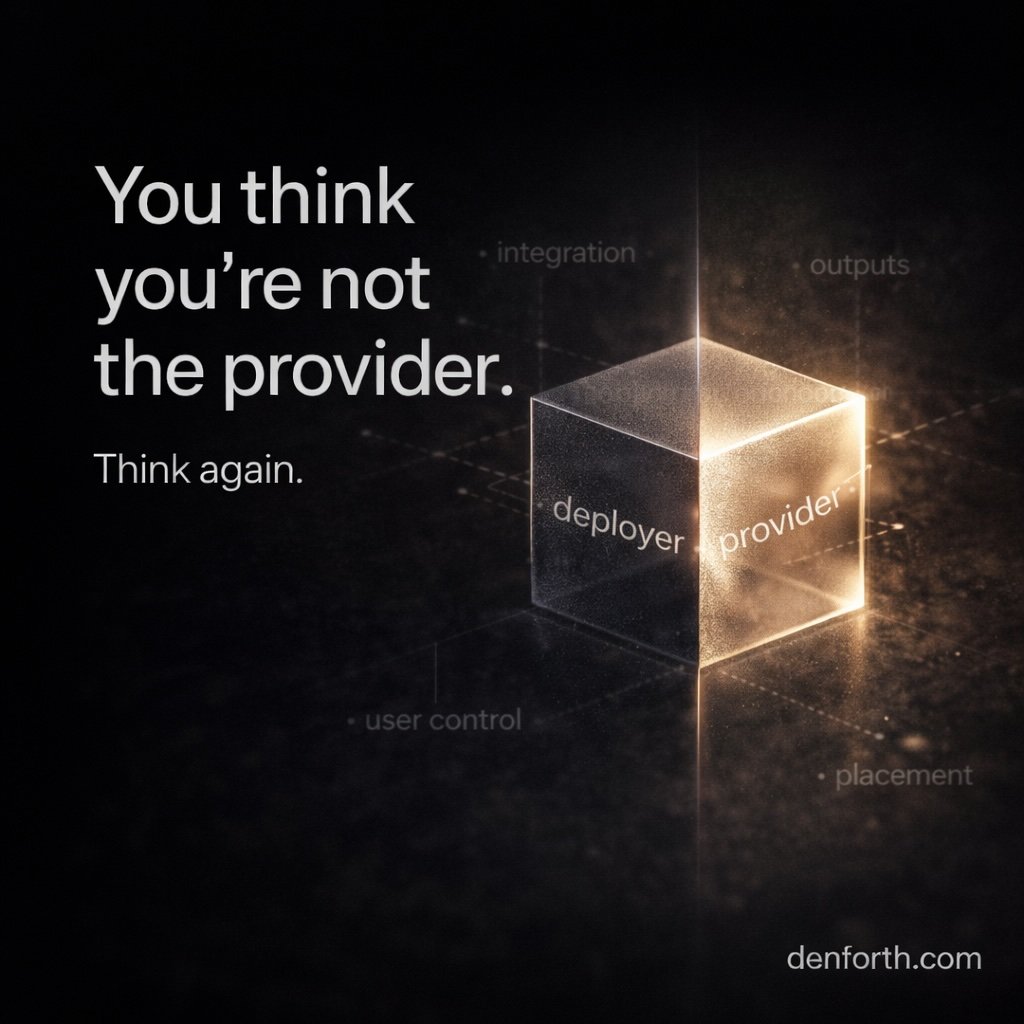
Most teams don’t think they are providers under the EU AI Act. And in many cases, that assumption feels reasonable: “We didn’t build the model.”“We’re just integrating existing AI.”“We’re using third-party systems.” But this is exactly where the risk begins. Because under the EU AI Act, you can be a provider without building the AI system.

Provider, Deployer, Distributor: Why You Might Be a Provider Without Building AI Read More »

denforth are you in scope

Before Compliance: Determining Whether You Are in Scope of the EU AI Act

There is a recurring pattern in discussions around the EU AI Act. Teams move quickly into questions of compliance: What documentation is required?How should governance be structured?Which tools can support implementation? But in many cases, a more fundamental question remains unanswered: Are we actually in scope? This is not a preliminary formality. It is a

Before Compliance: Determining Whether You Are in Scope of the EU AI Act Read More »

denforth ai provider vs deployer

AI Provider vs Deployer: Where Most Companies Misclassify Themselves (and Why It Matters)

Most companies approaching the EU AI Act start with a simple assumption: “We didn’t build the AI — so we’re not the provider.” This assumption is wrong more often than it is right. And more importantly, it is operationally dangerous. Because under the AI Act, your role is not determined by what you built, but by what you control,

AI Provider vs Deployer: Where Most Companies Misclassify Themselves (and Why It Matters) Read More »

why many ai saas companies cannot explain their eu ai act risk classification

Why Many AI SaaS Companies Cannot Explain Their EU AI Act Risk Classification

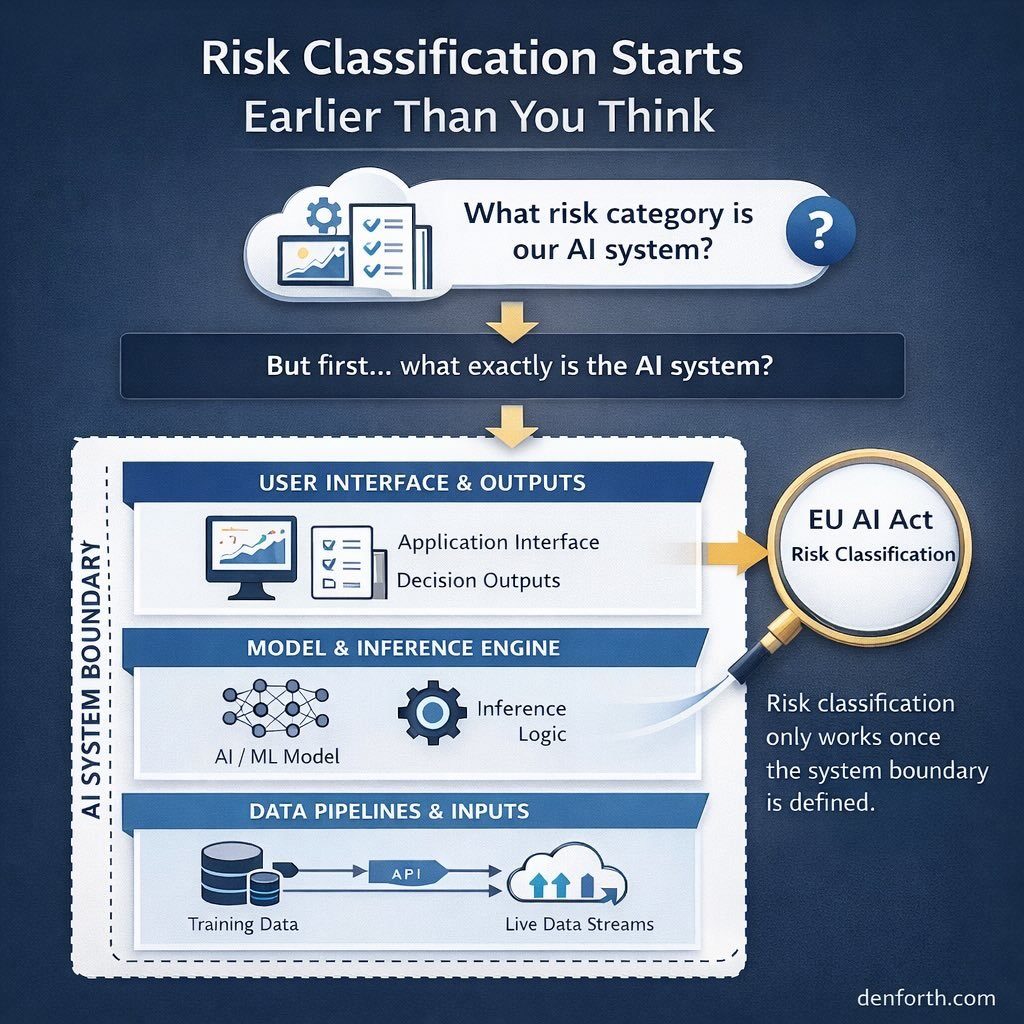
A practical governance issue most AI startups discover only when customers begin asking questions. Many AI SaaS companies assume that EU AI Act compliance will mainly involve reading regulatory text and mapping their product to the correct category. In practice, the difficulty appears much earlier. When founders or product leaders are asked about the risk classification

Why Many AI SaaS Companies Cannot Explain Their EU AI Act Risk Classification Read More »

highrisk denforth

High-Risk AI Systems Under the EU AI Act, Explained Simply

Once teams understand what counts as an AI system, the next question usually comes quickly. Are we dealing with a high-risk AI system? This question carries weight because high-risk classification is where the EU AI Act becomes concrete. Requirements increase, expectations rise, and timelines start to matter. At the same time, this part of the

High-Risk AI Systems Under the EU AI Act, Explained Simply Read More »

high risk ai denforth

High-Risk AI Under the EU AI Act: A Simple Decision Guide

One of the first questions teams ask about the EU AI Act is straightforward: “Is our system considered high-risk?” Unfortunately, many answers online make this question harder than it needs to be. Some jump straight to sector lists. Others reduce the decision to vague risk statements. Neither approach reflects how the Regulation actually works. This

High-Risk AI Under the EU AI Act: A Simple Decision Guide Read More »