Governance, Control & Best Practices

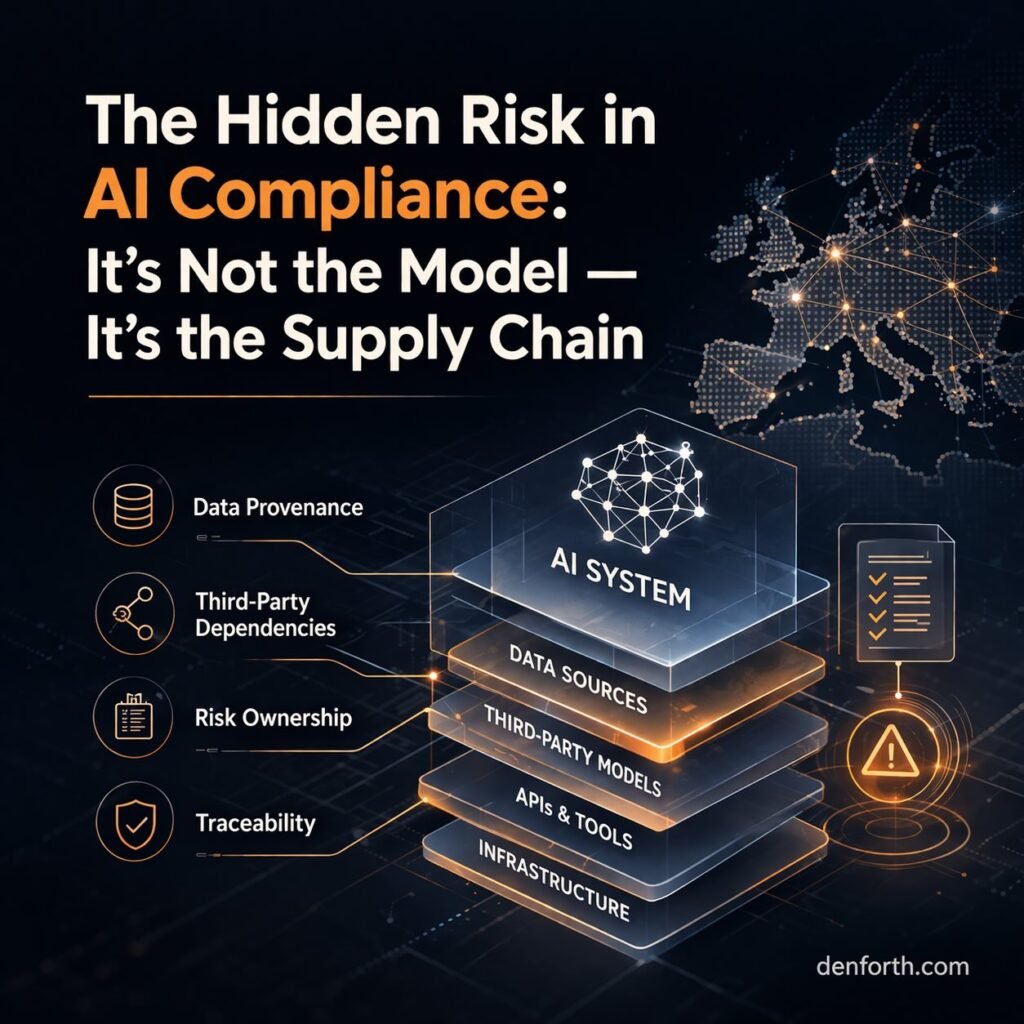
denforth hidden risk ai compliance

The Hidden Risk in AI Compliance: It’s Not the Model – It’s the Supply Chain

Most teams think AI compliance is about what they build. It’s not. It’s about everything they depend on. The model is only the visible layer.The real exposure sits underneath — in data sources, third-party APIs, fine-tuning pipelines, and tooling choices that no one fully documents. And that’s where things start to break. The uncomfortable reality […]

The Hidden Risk in AI Compliance: It’s Not the Model – It’s the Supply Chain Read More »

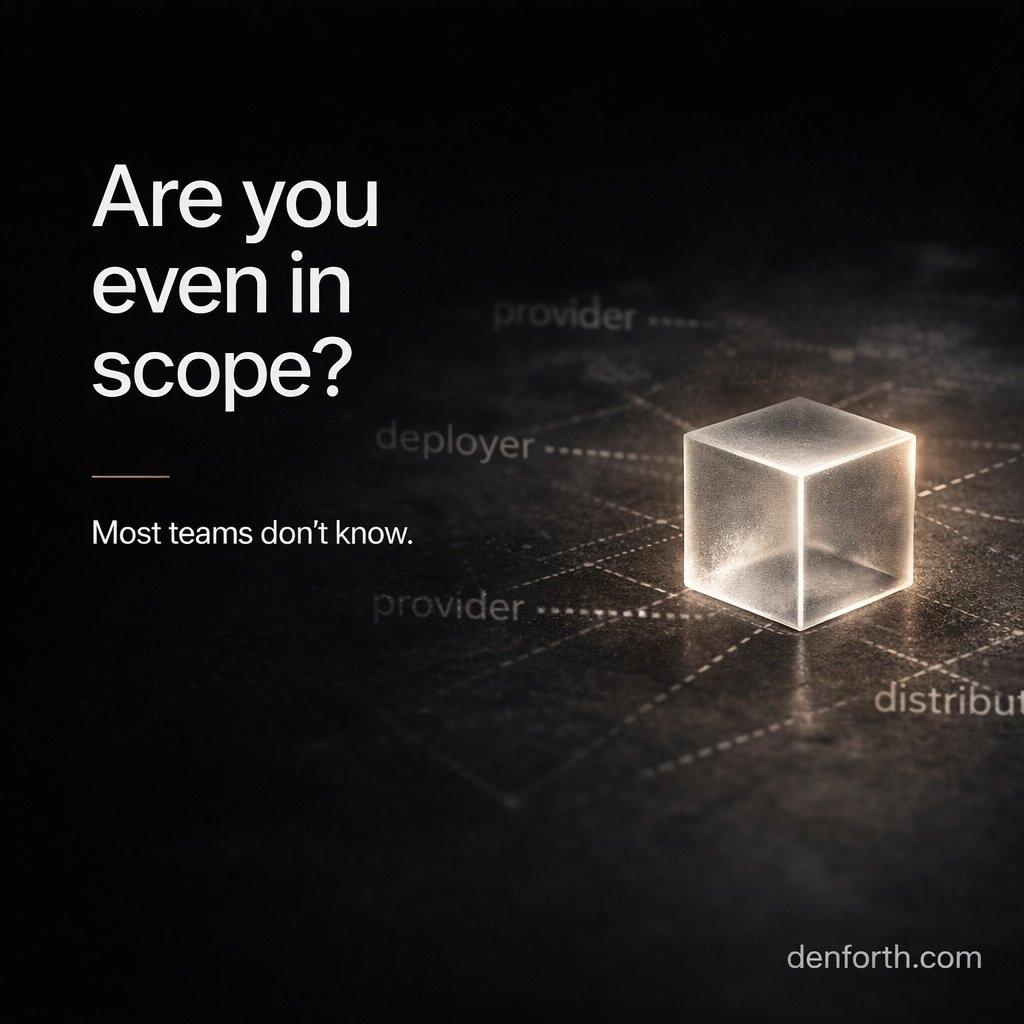
denforth are you in scope

Before Compliance: Determining Whether You Are in Scope of the EU AI Act

There is a recurring pattern in discussions around the EU AI Act. Teams move quickly into questions of compliance: What documentation is required?How should governance be structured?Which tools can support implementation? But in many cases, a more fundamental question remains unanswered: Are we actually in scope? This is not a preliminary formality. It is a

Before Compliance: Determining Whether You Are in Scope of the EU AI Act Read More »

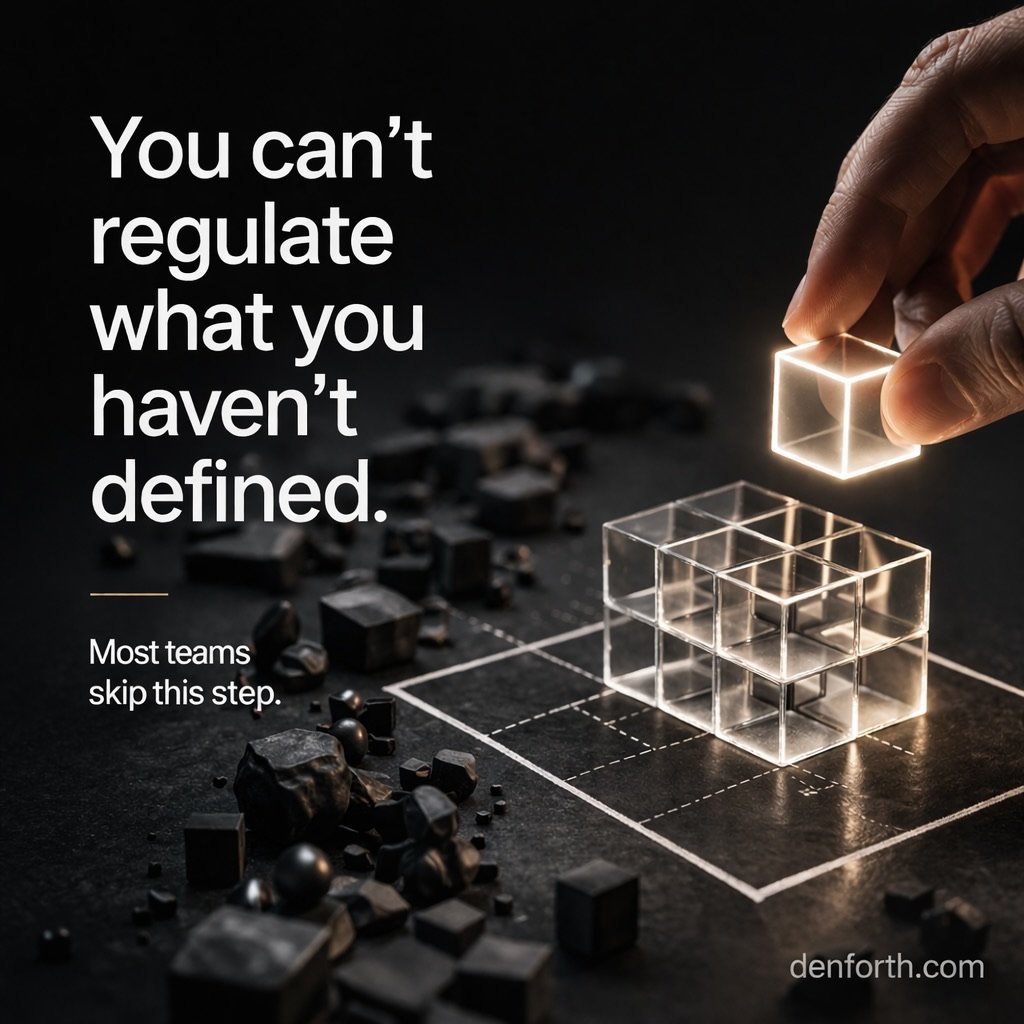
most teams don’t struggle with ai regulation because it’s too complex.

Most teams don’t struggle with AI regulation because it’s too complex.

They struggle because they’re trying to apply it to something they haven’t properly defined. When you ask a company what their “AI system” is, the answer is almost always vague. It’s framed in terms of tools or features. A model, an assistant, a recommendation engine. Something that sounds concrete, but actually isn’t—at least not in

Most teams don’t struggle with AI regulation because it’s too complex. Read More »

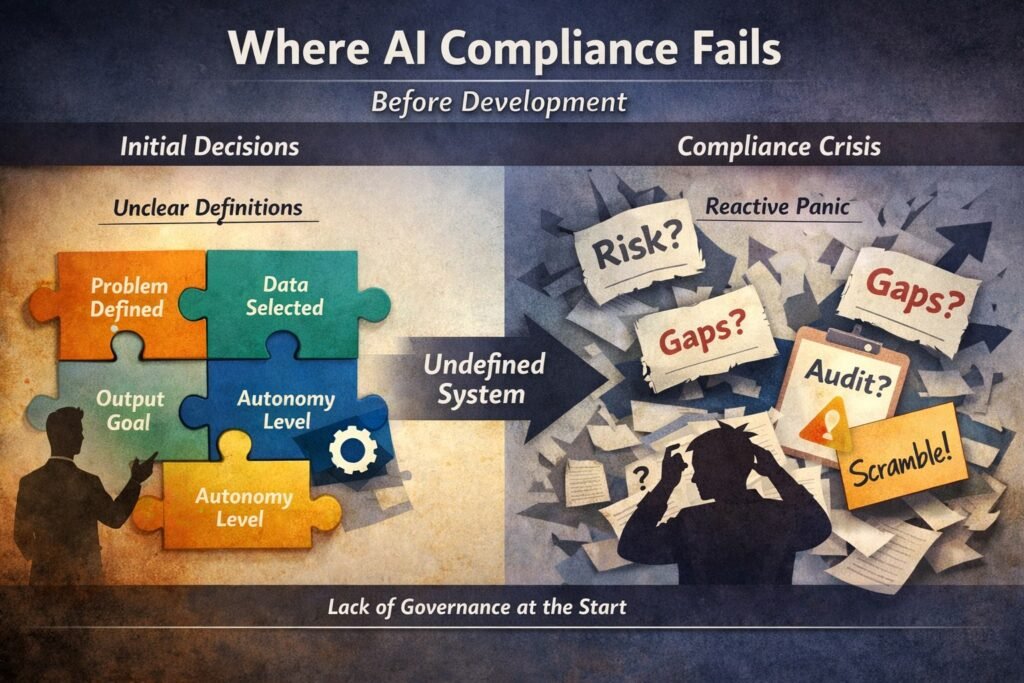
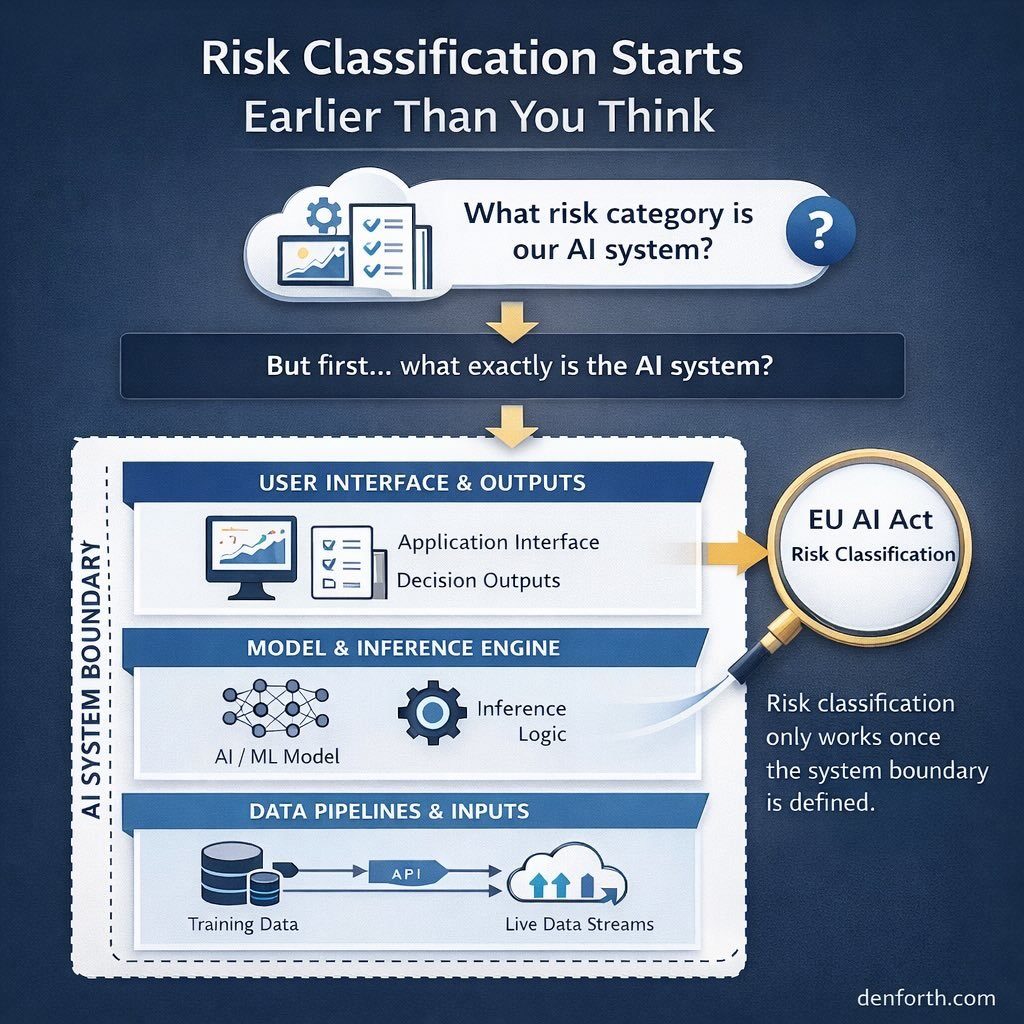
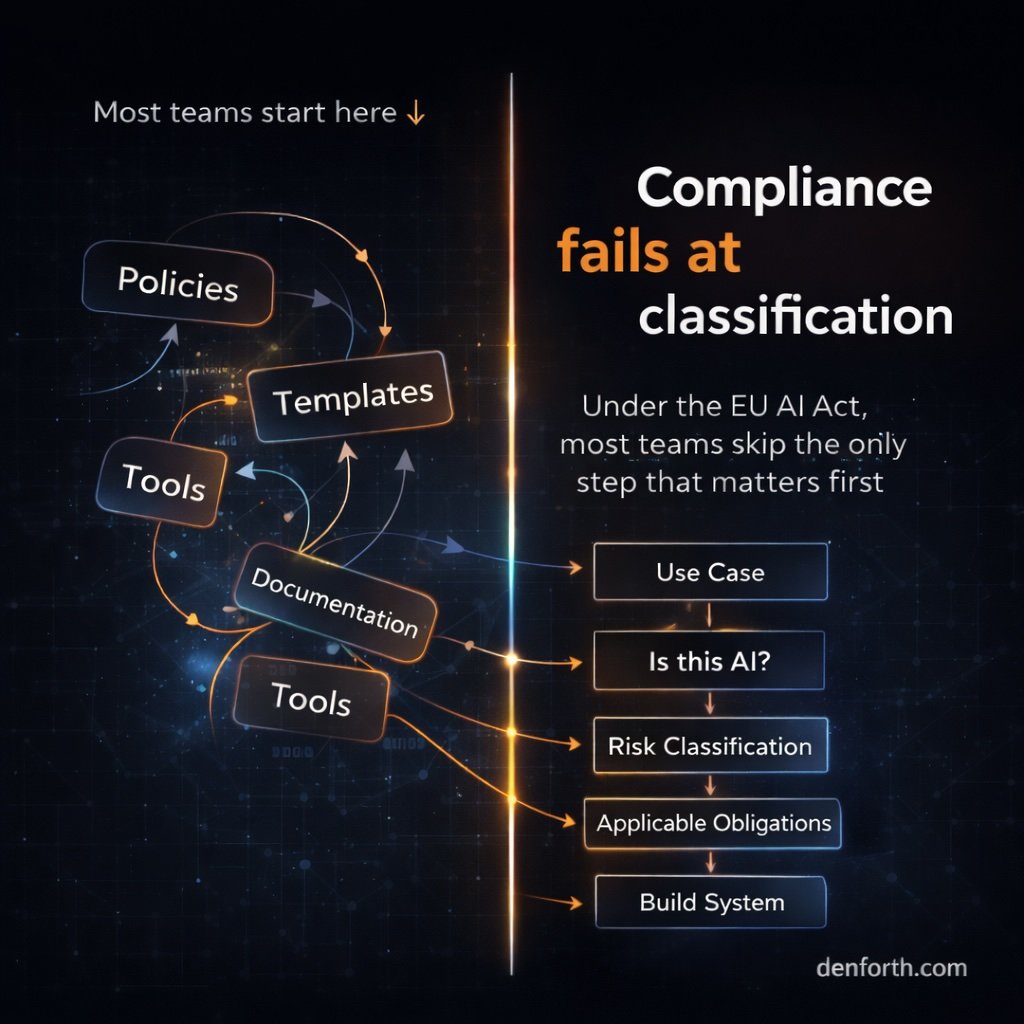
denforth where ai compliance fails

Why Most AI Systems Fail Compliance Before They Even Exist

Most teams think AI compliance starts when the system is built. It doesn’t. By the time you are thinking about documentation, testing, or risk classification, most of the important decisions have already been made — implicitly, and often without governance. This is where compliance actually begins. The EU AI Act defines an AI system not as a

Why Most AI Systems Fail Compliance Before They Even Exist Read More »

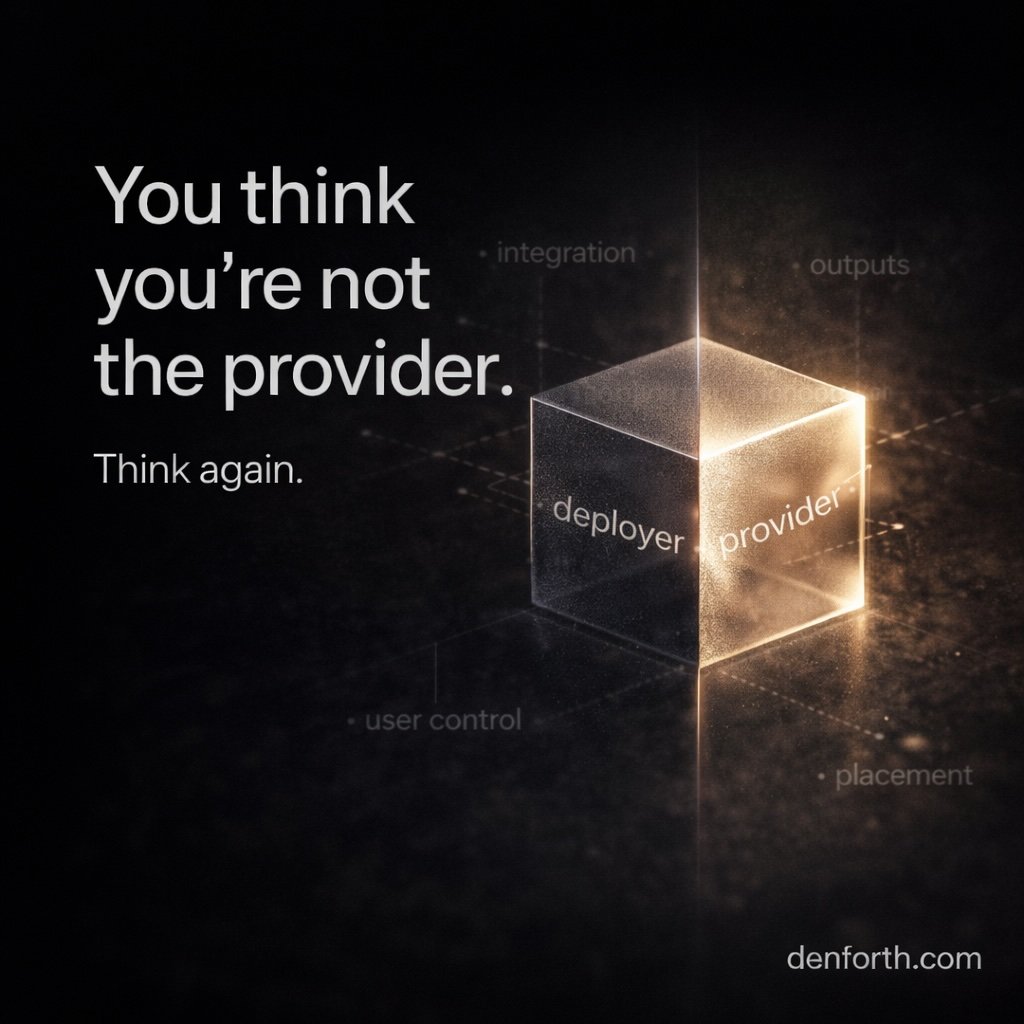
denforth ai provider vs deployer

AI Provider vs Deployer: Where Most Companies Misclassify Themselves (and Why It Matters)

Most companies approaching the EU AI Act start with a simple assumption: “We didn’t build the AI — so we’re not the provider.” This assumption is wrong more often than it is right. And more importantly, it is operationally dangerous. Because under the AI Act, your role is not determined by what you built, but by what you control,

AI Provider vs Deployer: Where Most Companies Misclassify Themselves (and Why It Matters) Read More »

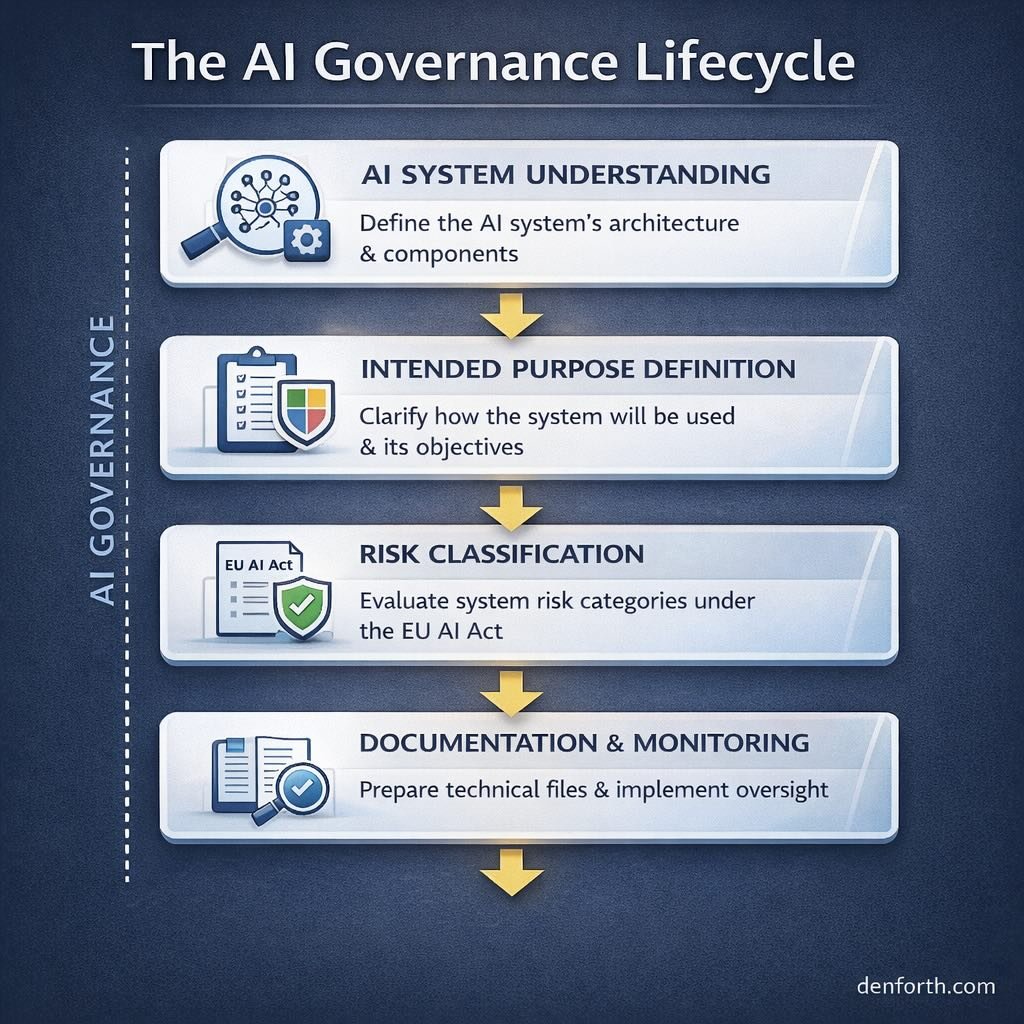
the ai governance lifecycle most teams discover too late

The AI Governance Lifecycle Most Teams Discover Too Late

When companies first encounter the EU AI Act, the conversation often begins with documentation. Teams ask questions like: “What documentation do we need?”“Do we have to prepare technical files?” These questions assume that AI governance begins with writing documents. In reality, documentation usually comes much later in the process. AI governance follows a lifecycle that

The AI Governance Lifecycle Most Teams Discover Too Late Read More »

why many ai saas companies cannot explain their eu ai act risk classification

Why Many AI SaaS Companies Cannot Explain Their EU AI Act Risk Classification

A practical governance issue most AI startups discover only when customers begin asking questions. Many AI SaaS companies assume that EU AI Act compliance will mainly involve reading regulatory text and mapping their product to the correct category. In practice, the difficulty appears much earlier. When founders or product leaders are asked about the risk classification

Why Many AI SaaS Companies Cannot Explain Their EU AI Act Risk Classification Read More »

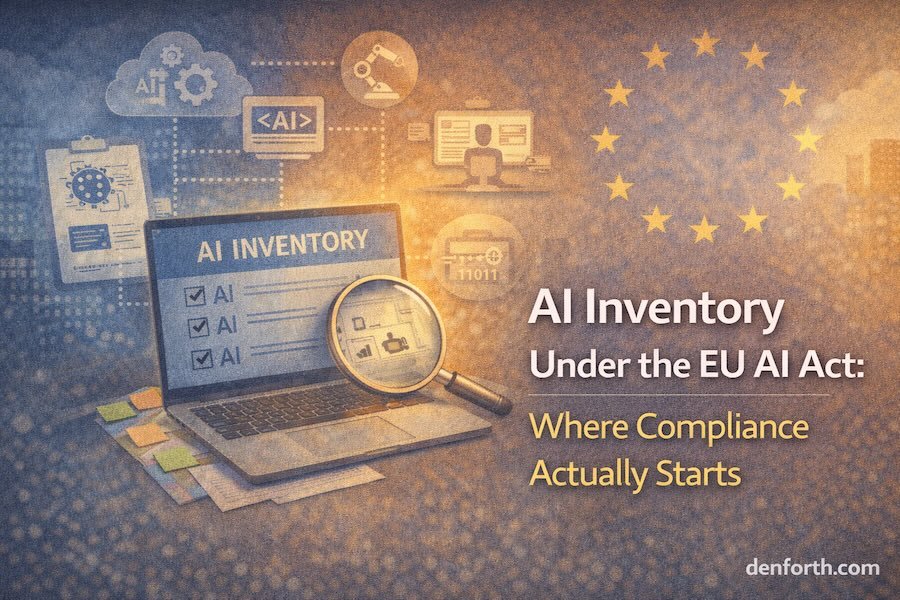
ai inventory denforth

AI Inventory Under the EU AI Act: Where Compliance Actually Starts

Most discussions about EU AI Act compliance begin with obligations. Risk management, documentation, conformity assessment. For many teams, this immediately feels overwhelming. In practice, compliance does not start with obligations. It starts with visibility. Before a team can classify risk, map roles, or plan timelines, it needs a clear picture of one thing: what AI

AI Inventory Under the EU AI Act: Where Compliance Actually Starts Read More »