Once teams understand what counts as an AI system, the next question usually comes quickly.
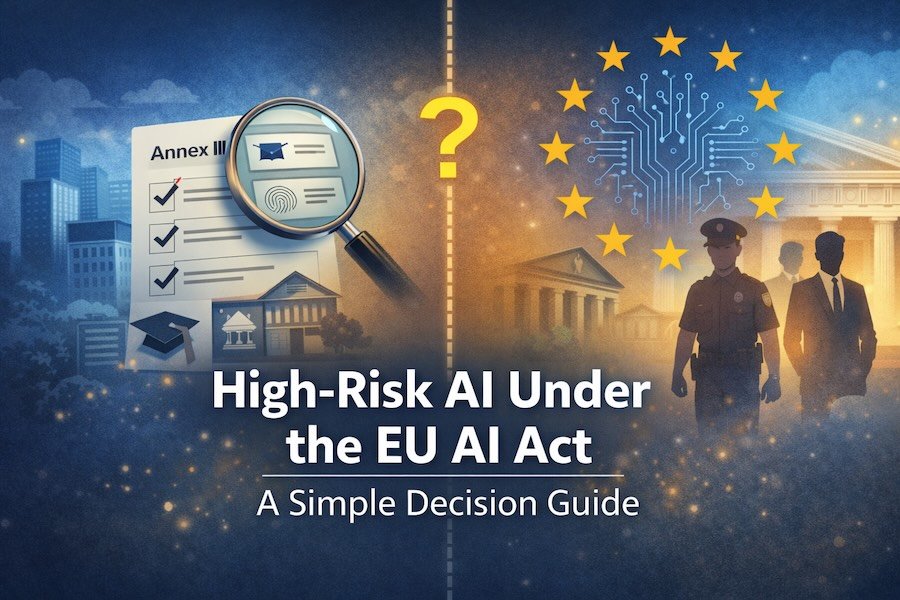
Are we dealing with a high-risk AI system?
This question carries weight because high-risk classification is where the EU AI Act becomes concrete. Requirements increase, expectations rise, and timelines start to matter. At the same time, this part of the Regulation is often misunderstood, even by experienced teams.
High-risk does not mean dangerous technology. It means elevated regulatory responsibility because of where and how the system is used.
The EU AI Act does not classify AI systems as high-risk based on technical complexity. A simple model can be high-risk, while a very advanced one may not be.
What matters is context.
The Regulation defines high-risk AI systems through two main pathways. One applies to AI systems that are safety components of regulated products, such as medical devices or machinery. The other applies to stand-alone AI systems used in specific areas listed in the Regulation, where the potential impact on fundamental rights or safety is significant.
This second pathway is the one most software and product teams encounter.
The areas listed as high-risk are not abstract. They are practical domains where AI decisions can meaningfully affect people’s lives.
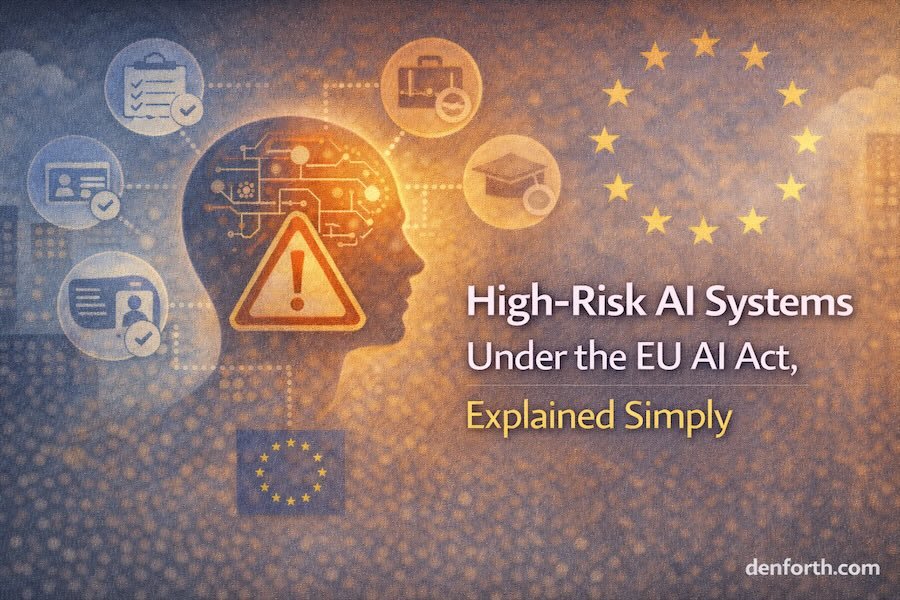
These include employment and worker management, access to education, creditworthiness, access to essential services, law enforcement, border control, and certain uses in healthcare and critical infrastructure.
The key idea is not whether harm will occur, but whether the use case has the potential to create serious consequences if something goes wrong.
A common misunderstanding is assuming that internal or assistive systems are automatically excluded.
They are not.
If an AI system materially influences decisions in a high-risk area, even if a human reviews the output, it may still fall within scope. Human involvement affects how requirements are implemented, but it does not automatically remove high-risk classification.
This is where many teams misjudge their exposure.
Another frequent mistake is focusing only on what the system does, instead of how it is used.
The same underlying model may be high-risk in one context and not in another. For example, a model used to suggest interview questions is very different from one used to rank or filter candidates. The technical core may be similar, but the regulatory implications are not.
High-risk classification follows intended purpose, not model architecture.
At this stage, many teams worry that high-risk classification automatically triggers conformity assessment or heavy documentation work.
That comes later.
The first practical step is screening, not compliance execution.
A sensible high-risk screening usually looks at a small number of questions:
- Is the system used in a domain listed as high-risk?
- Does it materially influence decisions affecting individuals?
- Would errors or bias have serious consequences in practice?
If the answers point consistently in one direction, the classification becomes clearer.
It is also important to note that the Regulation allows for nuance.
Some systems used in high-risk areas may still be considered non-high-risk if their influence is strictly limited, preparatory, or purely supportive. These cases require careful justification, not assumptions. The burden of reasoning sits with the provider.
This is why early documentation of classification decisions matters, even before formal compliance work begins.
High-risk classification is not a verdict. It is a signal.
It tells teams where to focus, where to slow down, and where structured controls will eventually be needed. Teams that approach this step calmly and methodically tend to avoid both overreaction and complacency.
The EU AI Act does not expect perfection. It expects reasonable, well-grounded decisions.
Clarity here makes everything that follows easier to manage.